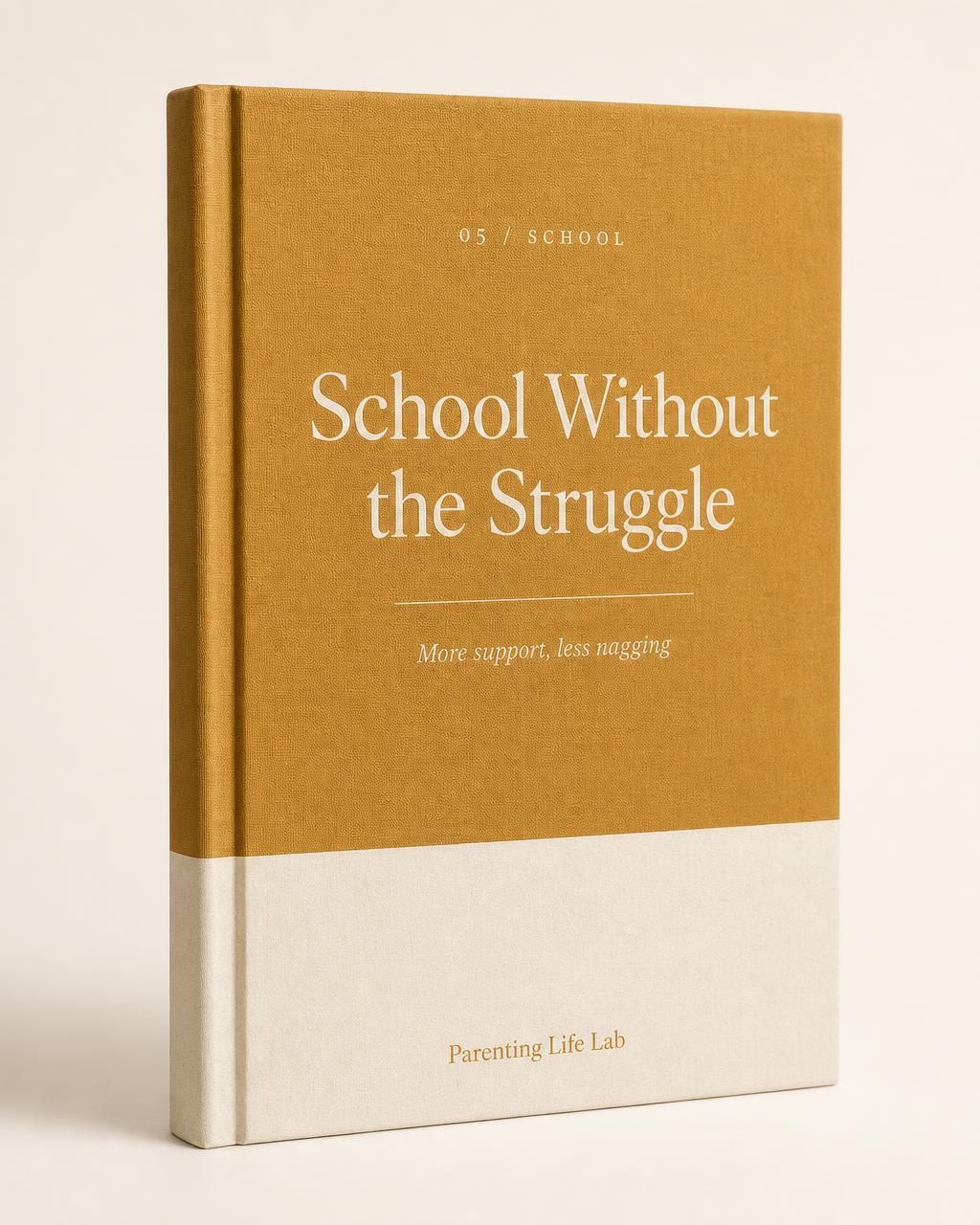
School Without the Struggle
Twenty minutes of homework. Two hours of getting to it.
More support. Less nagging. A clearer way to get started.
Instant PDF download · Secure checkout · Keep it forever
- 95 pages
- Instant download
- Written by K P S Moeller
- Personal support
One evening of reading and writing, and you finish with your own plan on paper — not another article to remember.
Free advice says build a routine. This tells you which of the four patterns you actually have, and gives you the start routine, the help signal and the school wording on paper.
Name the pattern, rewrite the first five minutes and write your help line. That already removes most of the daily negotiation, and you never have to finish all 95 pages.
Taking more than one? Any 2 guides save 15 percent, and the full library saves 25.
Sold by LouLouEntertainment, Stockholm. Payment handled by Stripe, download delivered instantly and emailed to you. Questions answered personally at hello@parentinglifelab.com.
When you finish the Core pass, you'll have this written down
- The actual pattern behind the homework struggle, named
- A start routine that removes the daily negotiation
- Your own line for how much help is the right amount
- Words for the school conversation you have been avoiding
- Your 7-day test and a version for two homes
How it is used
- 1Core60–90 minutesRead it in one evening and fill in your own plan as you go.
- 27-day testOne weekRun the plan for a week. One small change per day, nothing rebuilt overnight.
- 3Deep DiveWhen it breaksCome back to the section for the situation that went wrong, and adjust.
95 pages in total, Core first and Deep Dive after.
The mechanism, step by step
01Name the pattern
You identify whether this is avoidance, overwhelm, perfectionism or confusion, because they need opposite responses.
02Shrink the start
You rebuild the first five minutes, which is where the whole struggle actually lives.
03Set your help line
You mark where you sit on the scale from doing it for them to leaving them alone, and where you want to be in three months.
04Install the help signal
A way for the child to ask for support before the meltdown rather than after it.
05Decide what to raise with school
You separate what is yours to solve, what is the learner job and what belongs in an email to the teacher.
06Test for 7 days
One week of the new start routine with a nightly line about where it held.
Nothing here needs the school, the other parent or the child to buy in first. It changes the adult role around schoolwork, and that is enough to start.
If you only have 20 minutes
Name the pattern, rewrite the first five minutes and write your help line. That already removes most of the daily negotiation, and you never have to finish all 95 pages.
The work itself takes twenty minutes. Getting to the work takes two hours, three reminders and one argument that leaves everybody feeling worse about a worksheet.
You cannot make another person feel motivated. You can make the next step clearer, reduce the friction before it, and give the right amount of help rather than all of it.
This is a workbook about the adult role around school, not about teaching your child the subject.
This is not a productivity system for children
Colour-coded planners and reward charts are usually built for the adult who buys them. They collapse in week three because they add work to the exact moment when nobody has capacity.
What lasts is smaller: a clearer start, a visible help signal, and a decision about which jobs belong to the learner, which to the school and which to you.
The aim is to give you permission to stop doing several jobs you have quietly absorbed.
What is inside the workbook
10 short parts across Core and Deep Dive, written to be used rather than read once.
- 01
Name the actual pattern
Avoidance, overwhelm, perfectionism and confusion look identical from the kitchen and need opposite responses.
- 02
The start challenge
Why beginning is the hardest part, and the three changes that make it smaller.
- 03
How much help is right
A scale from doing it for them to leaving them alone, and how to move down it over months.
- 04
The help signal
A way for a child to ask for support before the meltdown instead of after it.
- 05
Stopping the takeover
What to do when your standards are quietly finishing their work at eight o clock.
- 06
School communication
What is worth raising with the school, how to phrase it, and what to stop absorbing at home.
- 07
Teens and ownership
Moving from supervision to consultation without letting everything fall over first.
- 08
Two homes, two systems
Keeping the support consistent across households without controlling the other one.
- 09
The 7-day test
One week of the new system with a nightly note about where it held.
- 10
Low-energy mode
What school support looks like on the evenings you cannot do any of this.
A look inside
3 of 95 pages shown at full size. Nothing here is a mock-up — these are the pages you print.
This is for you if
- Schoolwork at home turns into reminders, delay and arguments
- You have become the project manager for someone else work
- A child freezes, avoids or leaves everything to the last minute
- You want to help less and support better
Probably not for you if
- You want tutoring or subject-specific teaching material
- You want a reward chart that makes a child enjoy homework
- You are looking for an assessment of a learning difficulty. That needs a professional.
What this is built on
This workbook is not original research. It is a practical translation of work by people who did the research, tested against one ordinary family over several months. Here is what was read while writing it, and what each book actually contributed.
The Self-Driven Child — William Stixrud & Ned Johnson
The case for giving a child control over when homework starts, and for letting school consequences stay at school.
Mindset — Carol S. Dweck
How praise for effort changes what a child does when the work gets hard.
Smart but Scattered — Peg Dawson & Richard Guare
Executive function as a skill that is still being built, which reframes resistance that looks like laziness.
Book links go to Amazon and may earn a small commission at no cost to you. The full reading list behind the site is on the sources page, and the writing process is described in the methodology.
Edition 1.0 · updated August 1, 2026
- v1.0 (August 1, 2026) — First public edition. Every future revision will be listed here with the date.
Buy once and every later edition of this workbook is yours. Updates are sent to the email address you ordered with.
Questions people ask before buying
- What exactly do I get?
- A 95-page interactive PDF workbook, formatted for US Letter. Core is the first pass, Deep Dive is the troubleshooting library. Print it or fill it in digitally in any PDF reader that supports annotation.
- How is it delivered?
- Instantly. After checkout you land on a download page, and the same link is emailed to you so you can come back to it later.
- How long does it take?
- Core takes about 60 to 90 minutes, followed by a 7-day test in normal family life. Deep Dive is meant to be read in pieces, when a specific situation comes up.
- Can I get a refund?
- It is a digital file, so it cannot be returned once downloaded. If it is not what you expected, write to hello@parentinglifelab.com within 14 days and we will sort it out.
- Do I need to buy the other guides too?
- School Without the Struggle is complete on its own. The guides share a language, so they stack well, which is why two or more come with a discount — and until 31 August the 15% welcome offer stacks on top. None of them assume you own another one.
- Is there a low-energy version?
- Yes. Every guide has a low-energy mode: the smallest version of the system that still works during illness, deadlines, travel and the weeks you have nothing left.
Instant PDF workbook, Core + Deep Dive download, 95 pages. One-time payment in USD, no subscription. Written by K P S Moeller, the publishing byline of Per Moller, founder of Parenting Life Lab and sole proprietor of LouLouEntertainment (Sweden). Payments are processed securely by Stripe, with tax calculated at checkout.
By completing checkout you ask for the file to be delivered immediately and agree that your 14-day right of withdrawal ends once the download is delivered. All sales are final after that point, apart from the delivery problems listed in the refund policy.
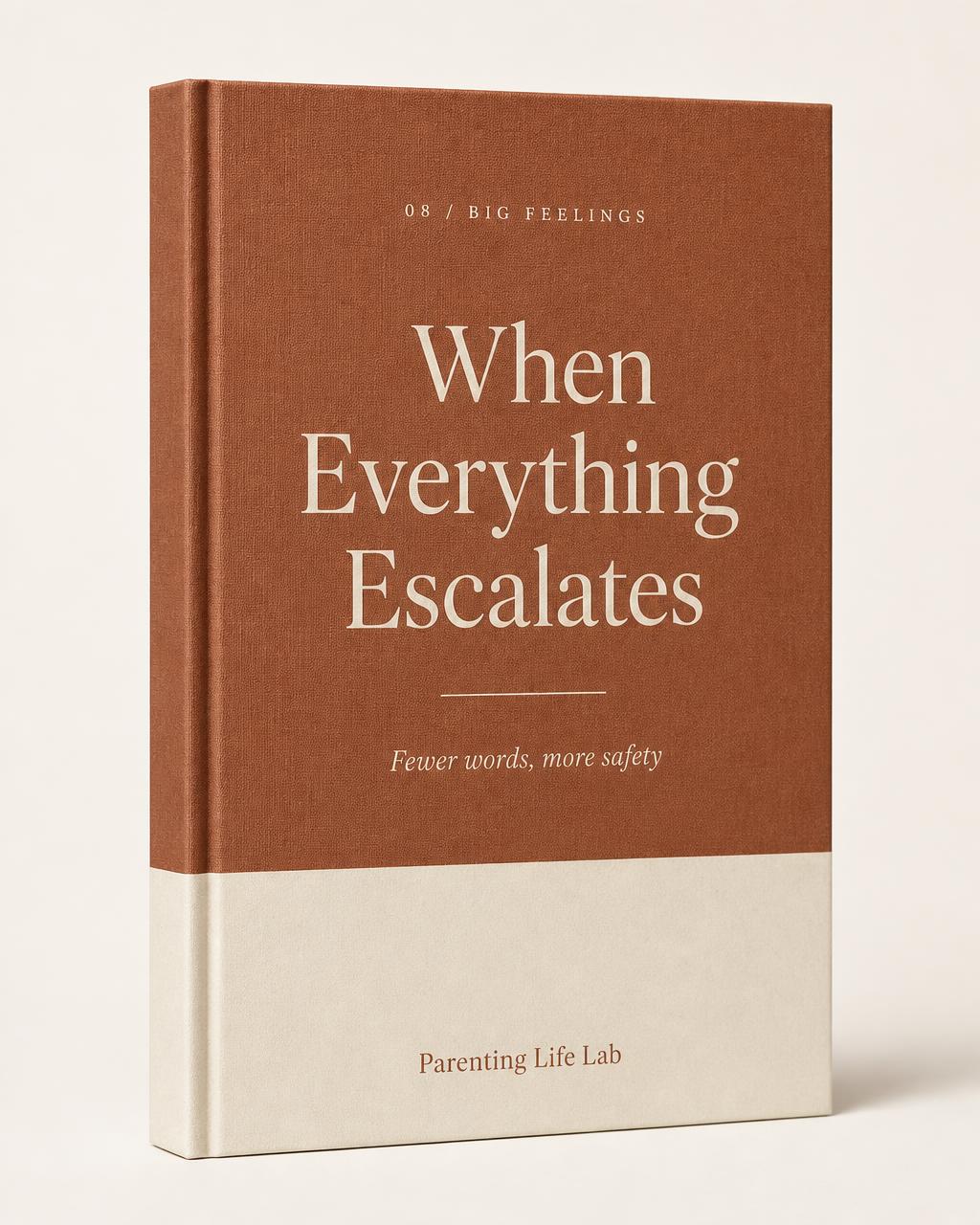
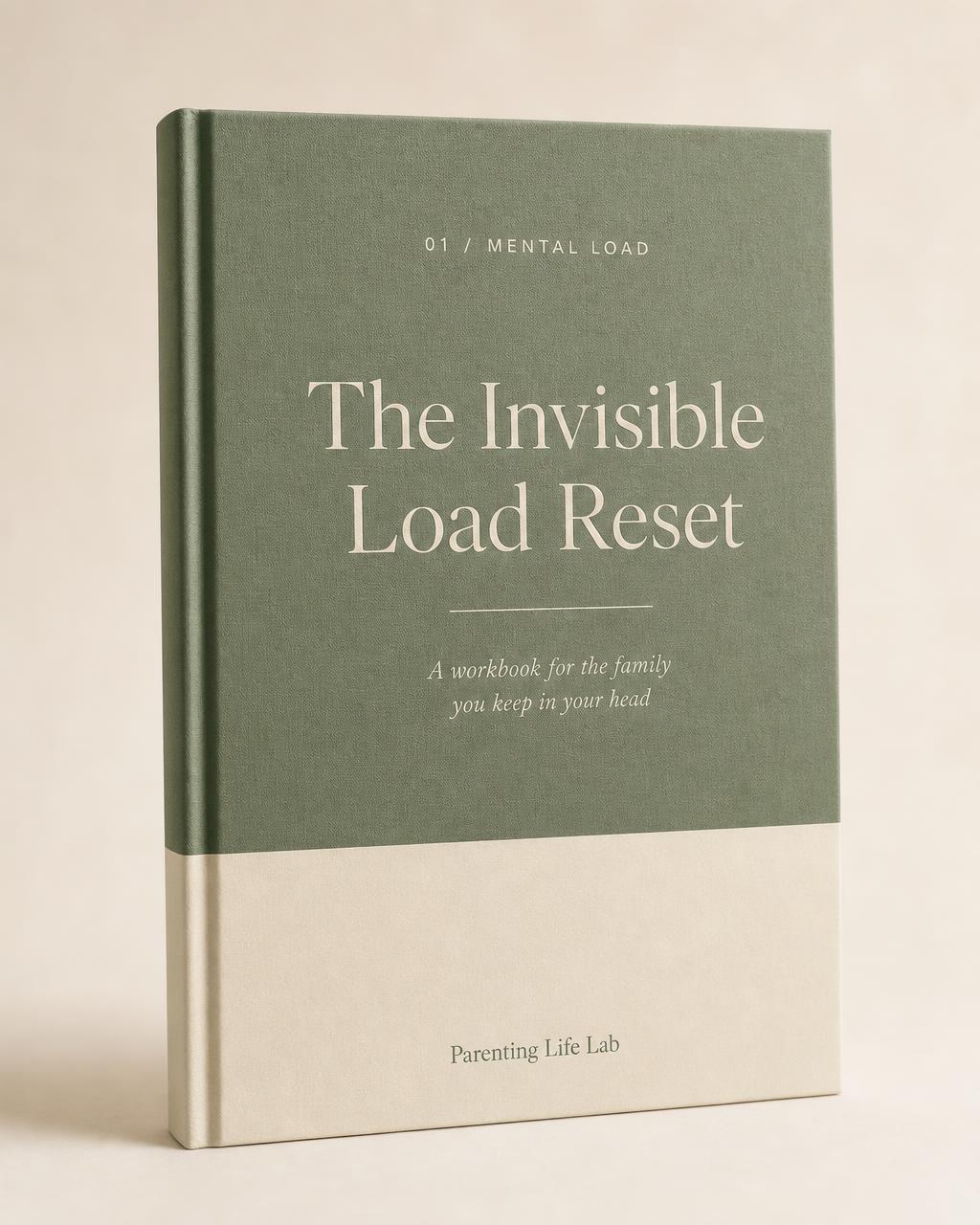
Often taken together
These three normally cost $20.70. Together they are $17.59, because of the bundle discount of 15 percent.
Build your own bundle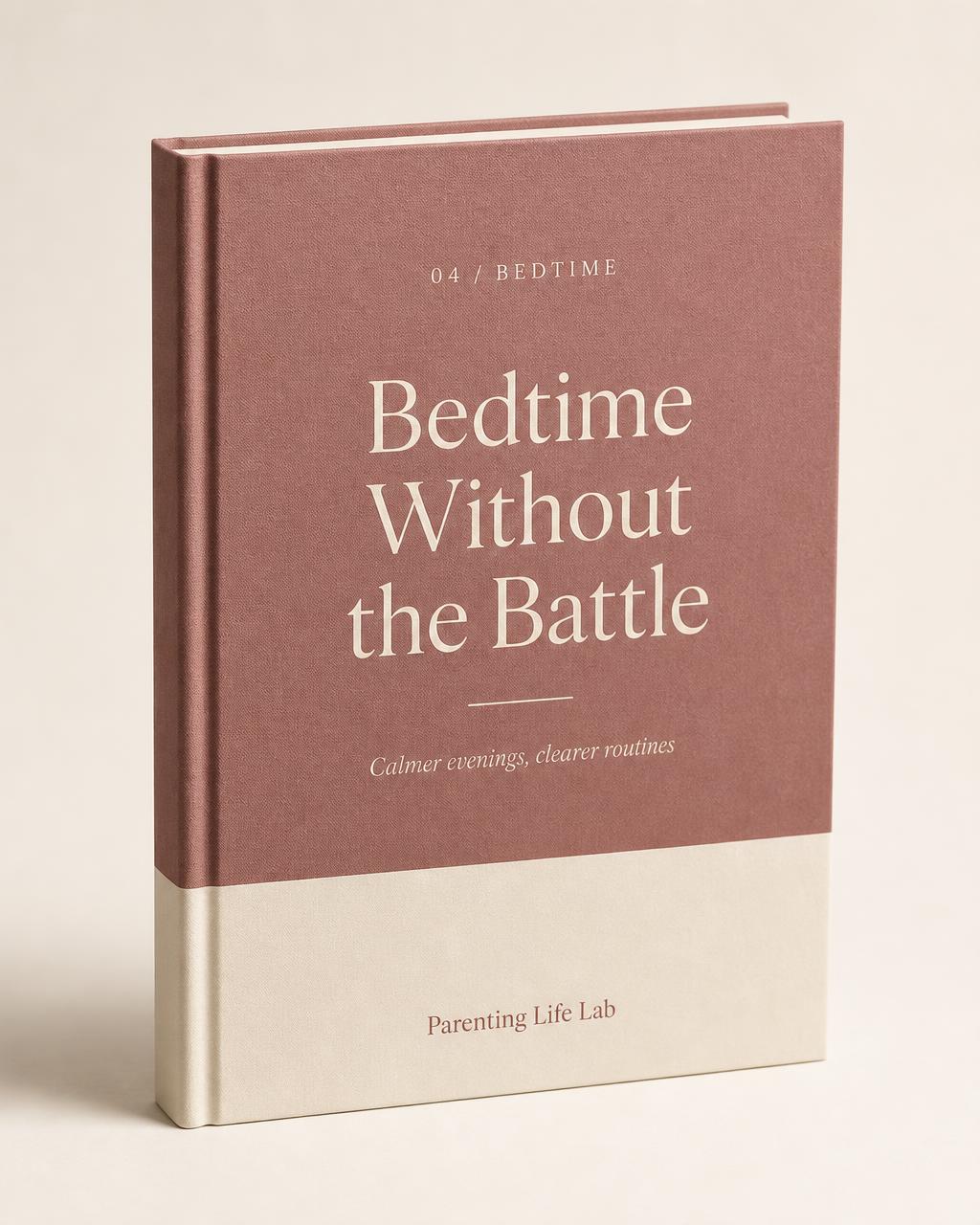
More support. Less nagging. A clearer way to get started.
95 pages, $6.90, and about ninety minutes of reading before anything in your week has to change.
Listen while you think it over
Want to go deeper first?
Audible has a free trial with thousands of parenting and psychology titles. If you are not ready for the workbook yet, this is a low-pressure way to keep learning.
Try Audible freeAffiliate link. As an Amazon Associate we earn from qualifying purchases, at no extra cost to you. Full disclosure.

Atomic Habits for Families: Building Small Routines That Stick
How James Clear's powerful habit-building principles can transform chaotic mornings into smooth, predictable family routines—one tiny change at a time.

No-Drama Discipline: Creating Calm Routines That Actually Work
Transform daily discipline battles into real teaching moments using the connect-and-redirect approach that builds lasting cooperation and self-regulation.

Creating Meaningful Family Moments Through Intentionality
Chip and Dan Heath's research reveals how small, intentional moments create lasting childhood memories and strengthen family bonds—no elaborate planning needed.
$6.90
95 pages · instant download