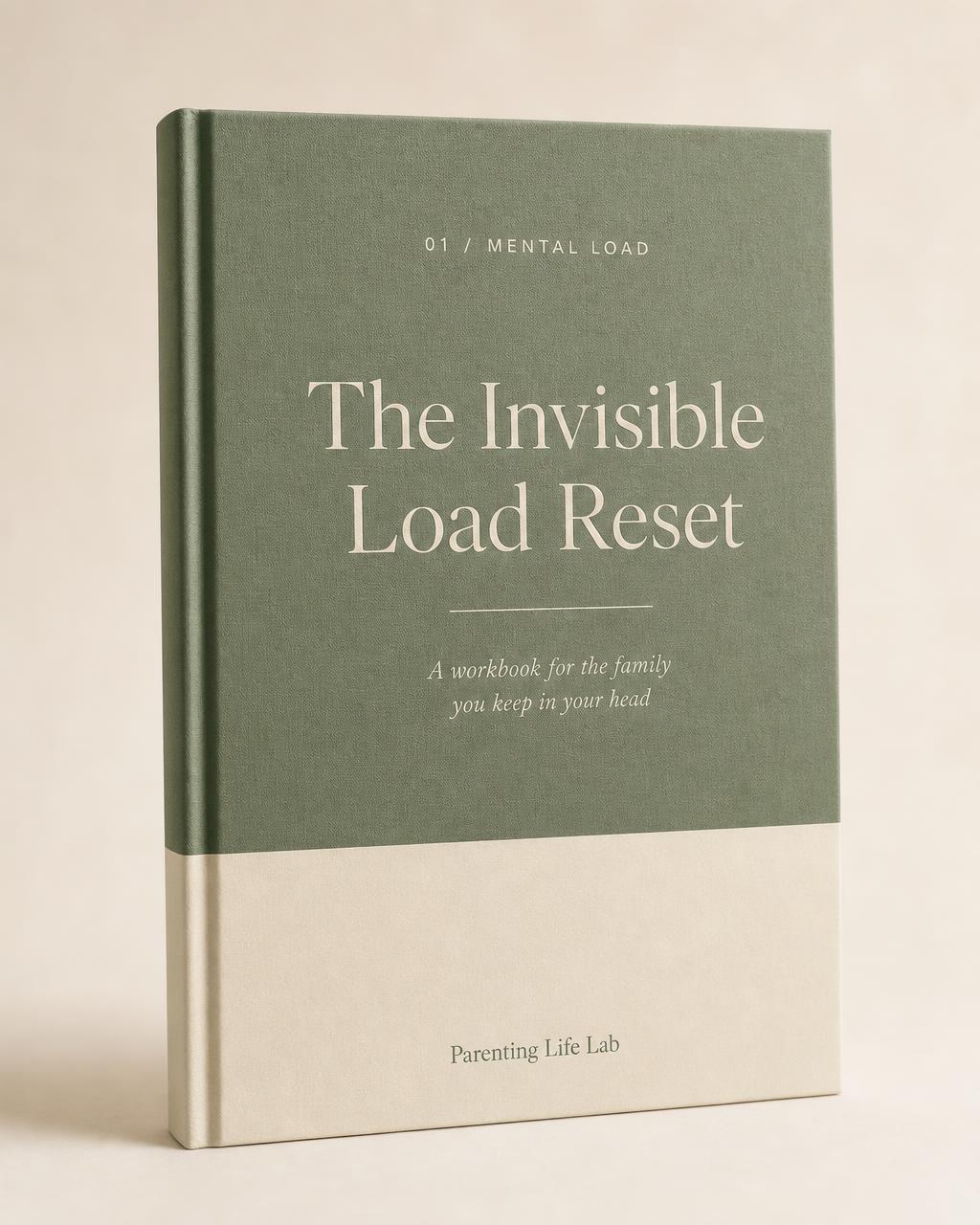
Now also available in premium hardcover on Amazon
The Invisible Load Reset
You remember everything, for everyone.
You remind everyone, and nobody reminds you.
You notice what is running out and what no longer fits.
You plan before anyone else realises there is something to plan.
Share the responsibility — without more arguments, more reminders, or managing your partner.
Instant PDF download · Secure checkout · Keep it forever
Prefer a physical copy? The premium hardcover edition is also available on Amazon.
See the hardcover on AmazonA look inside
Real worksheets from the workbook. 110 pages in total.
3 of 110 pages shown at full size. Nothing here is a mock-up — these are the pages you print.
More than a workbook
This workbook is one part of a larger library
We publish for parents first. The workbook gives you a structured plan, but most of what we make is free: articles, tools, and a glossary that puts words to the solutions.
Over 250 articles
Research-based parenting writing, sorted into four hubs: emotional skills, confidence, routines, and planning.
Explore the articlesSeveral family tools
Interactive helpers — planners, contracts, charts and routine builders. Part of the membership, free during your first month.
See the toolsA full glossary
Terms that put words to the solutions, so you can recognise patterns and explain them at home.
Read the glossaryYou might be carrying the invisible load if…
- You remind everyone, and nobody reminds you.
- You notice what is running out and what no longer fits.
- You plan before anyone else realises there is something to plan.
- Even when someone helps, you still have to manage it.
In one workbook you'll
- See where the invisible load actually sits
- Decide who truly owns each responsibility
- Agree on what "done" means
- Run a 7-day reset
- Keep it working with a 10-minute weekly check-in
Helping isn't the same as owning
Ownership means noticing, planning, remembering and completing — without another person managing the process. That is the difference between a partner who does the dishes when asked and a partner who owns the kitchen.
Instant PDF download · Secure checkout · Keep it forever
Prefer a physical copy? The premium hardcover edition is also available on Amazon.
See the hardcover on Amazon- 110 pages
- Instant download
- Written by K P S Moeller
- Personal support
One evening of reading and writing, and you finish with your own plan on paper — not another article to remember.
Free advice tells you what the challenge is called. This gives you the map, the scripts and a plan on paper the same evening — built, not collected.
Do the friction map, pick the two areas that cost you the most, and write the "good enough" line for each. That is a real result, and you can stop there. You never have to finish all 110 pages.
Taking more than one? Any 2 guides save 15 percent, and the full library saves 25.
Sold by LouLouEntertainment, Stockholm. Payment handled by Stripe, download delivered instantly and emailed to you. Questions answered personally at hello@parentinglifelab.com.
The Invisible Load Reset, now in hardcover
We just launched the printed edition on Amazon. If you would rather hold the book in your hands, keep it on the kitchen table, or give it to someone who carries too much — this is for you. Same method, same pages, in a format made to be given.
A gift for the partner, sister or friend who never asks for help — or for yourself, if paper is where your thinking happens.
Get the hardcover on AmazonWhen you finish the Core pass, you'll have this written down
- A written map of the areas your home actually runs on
- An ownership list showing who notices, decides and closes each loop
- Your 'good enough' standard, agreed instead of argued about
- Your 7-day reset, one small change per day
- A 10-minute weekly check-in you can keep using
How it is used
- 1Core60–90 minutesRead it in one evening and fill in your own plan as you go.
- 27-day testOne weekRun the plan for a week. One small change per day, nothing rebuilt overnight.
- 3Deep DiveWhen it breaksCome back to the section for the situation that went wrong, and adjust.
110 pages in total, Core first and Deep Dive after.
The mechanism, step by step
01Make it visible
You list the areas your home actually runs on, on paper, before anyone divides anything.
02Name who owns what
For each area you write who notices, who decides, who does it and who closes the loop.
03Redistribute
You move whole areas, not single tasks, so the noticing moves with the doing.
04Agree in writing
You write down the "good enough" standard for each moved area, so the method stops being renegotiated.
05Test for 7 days
One small change per day for a week, using the scripts when a conversation goes sideways.
06Adjust
A 10-minute weekly check-in where you fix what did not hold, before it turns into resentment.
If your partner will not sit down with it, start alone with two areas and the friction map. The scripts exist precisely for the conversation that has not happened yet.
If you only have 20 minutes
Do the friction map, pick the two areas that cost you the most, and write the "good enough" line for each. That is a real result, and you can stop there. You never have to finish all 110 pages.
You are the one who notices the shoes are getting small. Who remembers the dentist. Who knows which child needs a costume on Thursday and which one has stopped eating anything green.
None of that shows up as work. It has no start time and no finish. It just runs, quietly, in the back of your head, all day, every day.
This workbook is about turning that background process off. Not by doing more, and not by proving how much you already do.
This is not a chore scoreboard
Most mental-load advice ends the same way: break family life into 87 micro-tasks and count who did more. That creates a new job, tracking the tracking. And it turns two tired people into opponents.
This workbook works with areas of responsibility instead. Plant care is one area. Watering, feeding, repotting, noticing pests and buying soil are parts of it, not five pieces of evidence in a case against your partner.
The question is never who is right. It is whether your current system leaves one person carrying too much.
What is inside the workbook
12 short parts across Core and Deep Dive, written to be used rather than read once.
- 01
Find the friction
Five questions that surface the pattern behind the exhaustion, before you divide anything.
- 02
The ownership loop
Why "I did the task" and "I own the area" feel so different, and what actually transfers when you hand something over.
- 03
Map areas, not fragments
A starting set of areas most homes run on, and a rule for keeping them from splintering.
- 04
The "good enough" conversation
How to agree on the outcome so you stop negotiating the method every single time.
- 05
The other partner's side
What this looks like from the person who wants to contribute and keeps feeling corrected.
- 06
Conversation scripts
Word-for-word openings, plus better next moves for the four responses that usually derail this talk.
- 07
The 7-day reset
One small change per day. No redesigning your entire family in a single evening.
- 08
Low-energy mode
What meals, laundry, school and social life look like on the weeks you have nothing left.
- 09
Permission to subtract
Some responsibilities do not need redistributing. They need to disappear.
- 10
The 10-minute check-in
A short weekly place to surface what changed before it turns into resentment.
- 11
The two-week experiment
How to test an arrangement, and how to review it without keeping score.
- 12
Sentences for hard conversations
The bonus pages most people photograph and keep on their phone.
This is for you if
- You are the default parent and you are tired of being the one who remembers
- You want relief, not a fight about fairness
- You are parenting alone and need the load to be smaller, not split
- You and your partner have different standards and keep arguing about method
Probably not for you if
- You want a points system that proves who does more
- You are looking for a quick motivational read rather than a workbook you write in
- There is fear, coercion or control in the relationship. This is a practical tool, not therapy or safety planning.
What this is built on
This workbook is not original research. It is a practical translation of work by people who did the research, tested against one ordinary family over several months. Here is what was read while writing it, and what each book actually contributed.
Fair Play — Eve Rodsky
The idea that a responsibility is only handed over when the noticing and the planning go with it. The workbook uses areas of ownership rather than her card system.
Drop the Ball — Tiffany Dufu
Where the permission to subtract comes from. Some responsibilities do not need redistributing, they need to stop.
Burnout — Emily Nagoski & Amelia Nagoski
Why finishing the task and finishing the stress are two different things, which is the reason a fair split can still leave you exhausted.
Book links go to Amazon and may earn a small commission at no cost to you. The full reading list behind the site is on the sources page, and the writing process is described in the methodology.
Edition 1.0 · updated August 1, 2026
- v1.0 (August 1, 2026) — First public edition. Every future revision will be listed here with the date.
Buy once and every later edition of this workbook is yours. Updates are sent to the email address you ordered with.
Questions people ask before buying
- What exactly do I get?
- A 110-page interactive PDF workbook, Core plus Deep Dive, formatted for US Letter. You can print it or fill it in digitally in any PDF reader that supports annotation.
- How is it delivered?
- Instantly. After checkout you land on a download page, and the same link is emailed to you so you can come back to it later.
- Does it work if my partner refuses to take part?
- Partly, and honestly that is worth knowing before you buy. The friction map, low-energy mode and permission to subtract all work alone. The ownership map needs a second person eventually, though several readers have used the scripts to get that conversation started.
- How long does it take?
- Core takes about 60 to 90 minutes. The 7-day reset is designed for roughly 10 minutes a day. The two-week experiment runs in the background of normal life.
- Can I get a refund?
- It is a digital file, so it cannot be returned once downloaded. If it is not what you expected, write to hello@parentinglifelab.com within 14 days and we will sort it out.
- Is it only for couples?
- It is written primarily for the person who feels overloaded. The structure applies to any household where one person is doing all the noticing, including single-parent homes and shared custody.
Instant PDF workbook, Core + Deep Dive download, 110 pages. One-time payment in USD, no subscription. Written by K P S Moeller, the publishing byline of Per Moller, founder of Parenting Life Lab and sole proprietor of LouLouEntertainment (Sweden). Payments are processed securely by Stripe, with tax calculated at checkout.
By completing checkout you ask for the file to be delivered immediately and agree that your 14-day right of withdrawal ends once the download is delivered. All sales are final after that point, apart from the delivery problems listed in the refund policy.
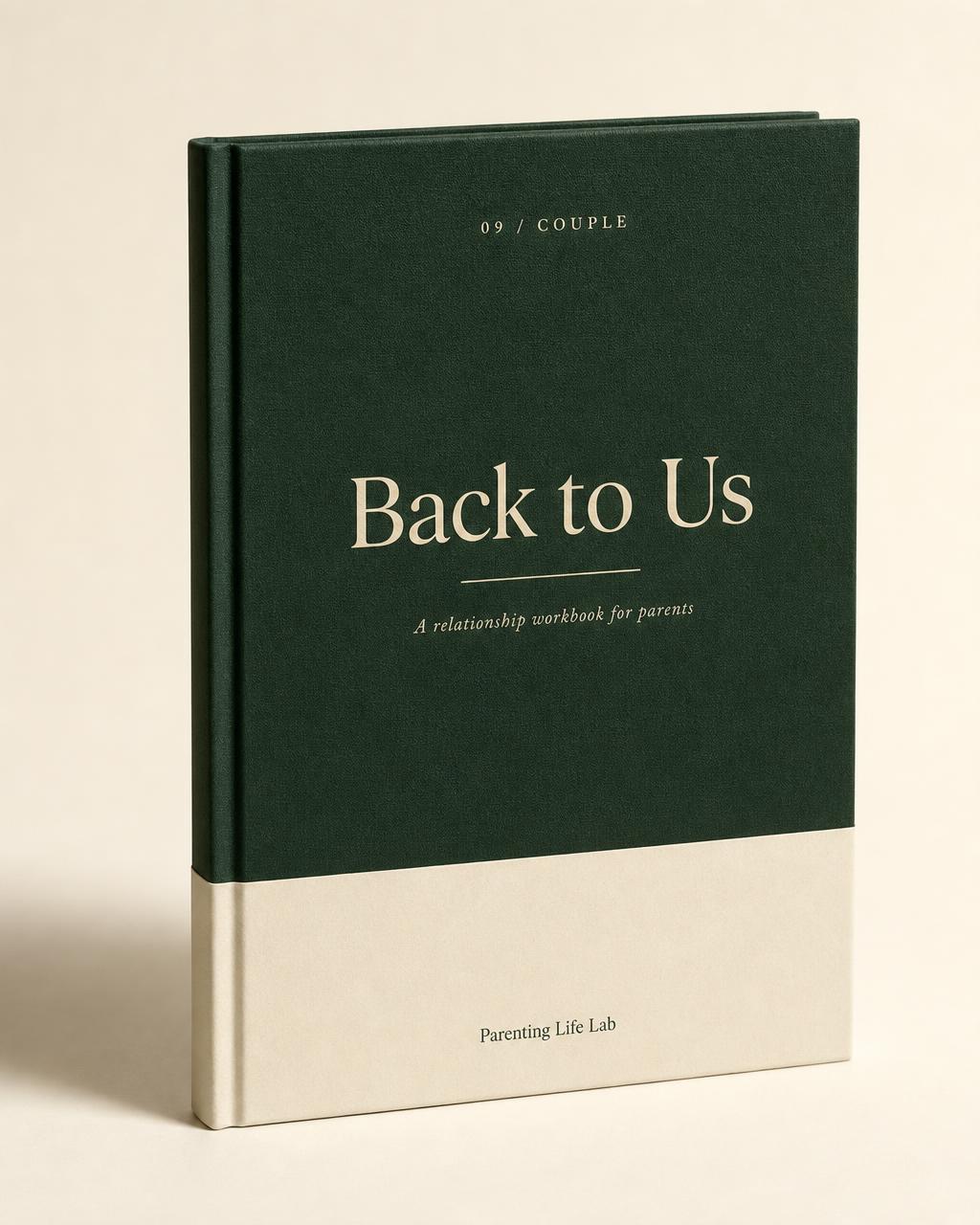
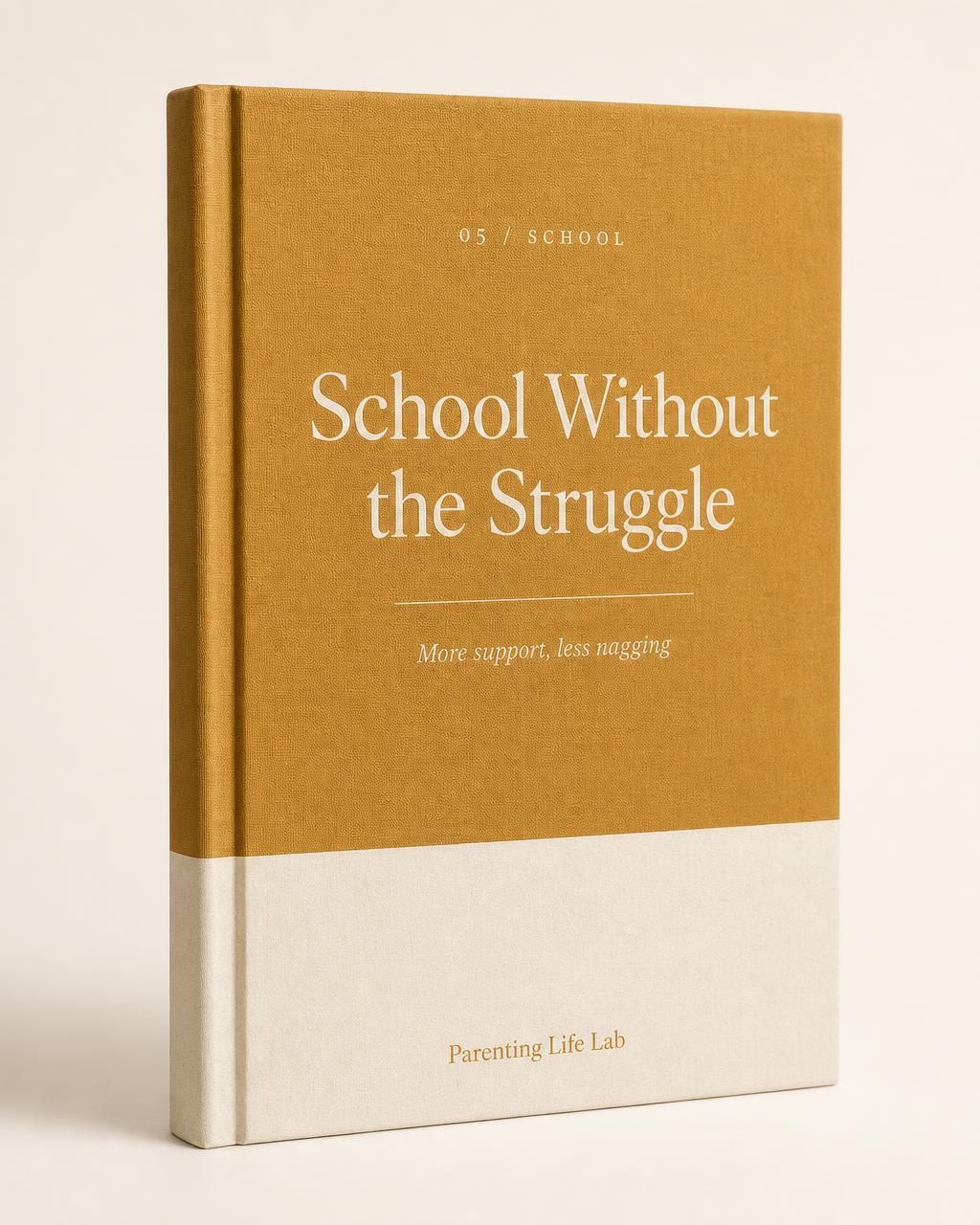
Often taken together
These three normally cost $20.70. Together they are $17.59, because of the bundle discount of 15 percent.
Build your own bundle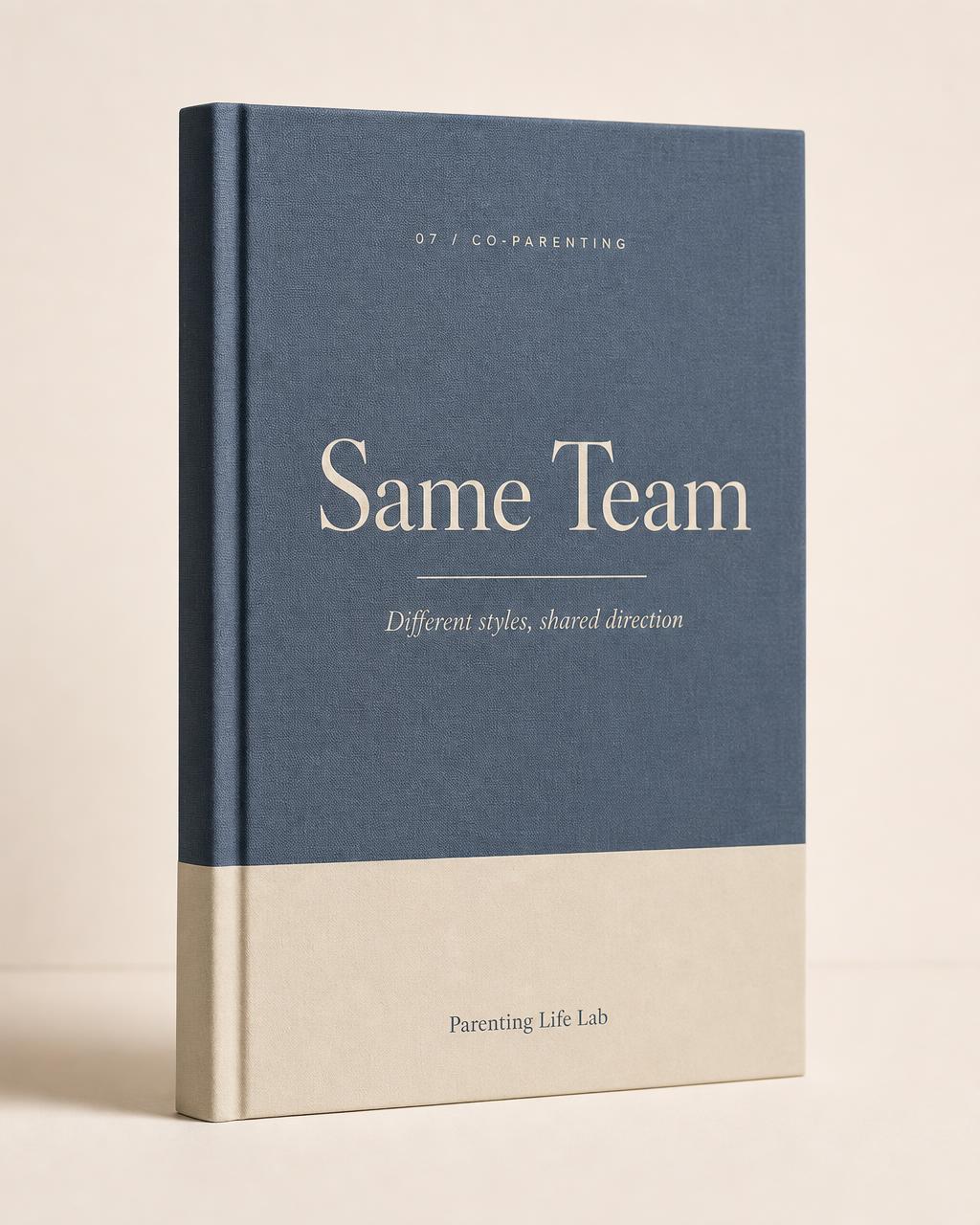
Stop carrying the whole family in your head
110 pages, $6.90, and about ninety minutes of reading before anything in your week has to change.
Listen while you think it over
Want to go deeper first?
Audible has a free trial with thousands of parenting and psychology titles. If you are not ready for the workbook yet, this is a low-pressure way to keep learning.
Try Audible freeAffiliate link. As an Amazon Associate we earn from qualifying purchases, at no extra cost to you. Full disclosure.

Meal Prep Magic: How to Get Kids Eating Real Food (The French Way)
French parenting principles and strategic meal prep can transform picky eaters into adventurous food lovers who happily eat what the whole family eats.

Simplicity Parenting: Less Stuff, Less Stress, More Childhood
Kim John Payne's research shows how reducing toys, activities, and clutter can transform your family's stress levels and give children space to thrive.

Essentialism for Parents: The Disciplined Pursuit of Less
Greg McKeown's philosophy of 'less but better' offers overwhelmed parents a path to meaningful family life by ruthlessly eliminating the non-essential.
$6.90
110 pages · instant download