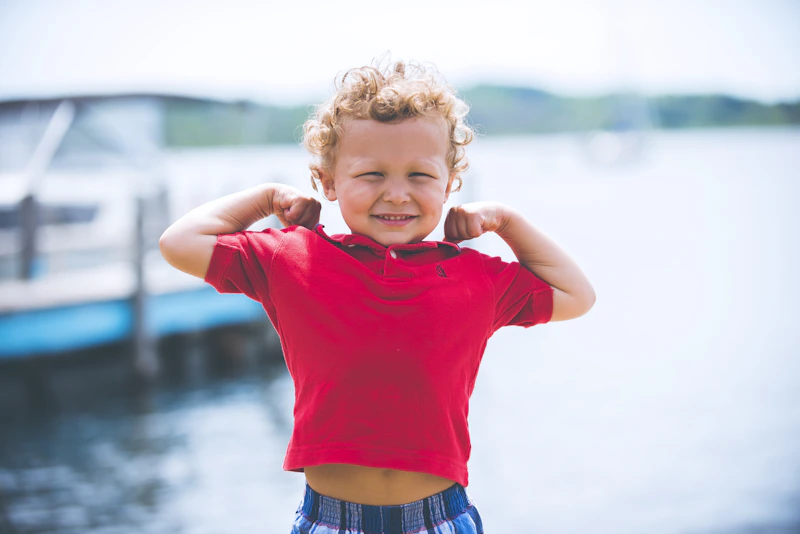
A four-year-old watches another child fall off the swing and immediately runs over, not to help, but to stare. Her mother gently says, "She looks like she might be hurt. What could we do?" The child pauses, then walks over and offers her hand. That exchange—brief, quiet, unforced—is kindness teaching in its simplest form. Not a lecture about being nice. Not a reward chart for sharing. Just a moment where a parent helped a child notice someone else's experience and respond to it.
Kindness is not a personality trait that children either have or lack. It is a set of skills—perspective-taking, emotional awareness, impulse regulation, and behavioral choice—that develop through practice and modeling. The research on prosocial development makes this clear: children become kind the same way they become literate. Through exposure, guidance, and repeated experience.
What Is Kindness Teaching?
Kindness teaching refers to the intentional practice of helping children develop prosocial behaviors—actions that benefit others, including sharing, helping, comforting, cooperating, and showing empathy. It differs from simply telling children to "be nice" or punishing unkind behavior. The focus is on building internal motivation rather than external compliance.
The approach draws on developmental research showing that prosocial behavior has both biological and environmental components. Children are born with the capacity for empathy—mirror neurons fire when they observe others' emotions—but the translation from feeling to action requires learning. A toddler may feel distressed when another child cries but not know what to do about it. A seven-year-old may understand that a classmate feels excluded but lack the social courage to include them. Kindness teaching bridges those gaps.
It includes three dimensions: emotional (helping children recognize and care about others' feelings), cognitive (helping children understand different perspectives), and behavioral (giving children concrete strategies for kind action). All three matter. A child who feels empathy but never acts on it has not fully developed the skill. A child who performs kind actions without genuine feeling is complying, not growing.
Why Kindness Teaching Matters for Families
A longitudinal study published in the American Journal of Public Health in 2015 tracked 753 children from kindergarten through age 25. The single strongest predictor of adult wellbeing—stronger than academic achievement, family income, or early reading ability—was prosocial competence in kindergarten. Children who were rated as helpful, cooperative, and empathetic at age 5 were significantly more likely to graduate from college, hold stable employment, and avoid substance abuse two decades later.
Within the family, children who practice kindness develop stronger sibling relationships and deeper parent-child bonds. They learn to read emotional cues, which reduces conflict and builds trust. Parents often notice a shift: the household becomes calmer not because problems disappear, but because family members develop the habit of considering each other's needs before reacting.
There is also a protective factor. Children with strong prosocial skills are less likely to be involved in bullying—either as perpetrators or as bystanders who fail to intervene. They develop what researchers call "moral courage," the willingness to act on their values even when it is socially risky. That courage does not emerge from lectures about right and wrong. It emerges from hundreds of small moments where a child practiced noticing, caring, and responding.
How Prosocial Development Works
Children's capacity for kindness develops in predictable stages, though the timeline varies with temperament and experience.
Between 12 and 18 months, toddlers begin showing "empathic distress"—they become upset when others are upset. This is the biological foundation. By age 2, most children attempt to comfort others, though their methods are egocentric (offering their own blanket to a crying adult, for example). By ages 3 to 4, perspective-taking begins to develop, and children start to understand that others may want different comfort than they would.
Between ages 5 and 7, children can grasp the concept of fairness and begin to share more equitably—though self-interest still dominates in competitive situations. By ages 8 to 10, children develop the cognitive capacity for true perspective-taking: understanding that someone can feel differently than they look, that context matters, and that kindness sometimes means doing something difficult.
The critical insight is that these stages unfold naturally only when the environment supports them. Children who are punished for expressing negative emotions learn to suppress feelings rather than manage them. Children who are rewarded for sharing learn to perform generosity for approval rather than from genuine care. The goal is to create conditions where kindness develops as an authentic expression of the child's growing social awareness.
Practical Application for Parents
Model narrated kindness. When you do something kind, say why—not in a preachy way, but conversationally. "I'm bringing soup to the neighbor because she mentioned she wasn't feeling well. It's a small thing, but it might help." Children learn more from what they observe than from what they are told. When they hear your reasoning, they internalize both the behavior and the motivation.
Use "noticing" language instead of commands. Rather than "Share your toys," try "I notice your friend is watching you play. She looks like she might want a turn." This shifts the child from obedience to observation. Over time, they begin to notice on their own—and that internal noticing is the engine of genuine kindness.
Create opportunities for helping that feel real, not manufactured. Children see through fake tasks. But genuine responsibilities—helping prepare a meal for a sick relative, writing a card for a grandparent, choosing toys to donate—give them the experience of their actions mattering to someone else. The key word is "genuine." A child who helps because it is genuinely useful develops a different relationship with kindness than a child who helps because a parent engineered the situation.
Discuss emotions in stories and real life. When reading together, pause: "How do you think she felt when her friend said that?" When a conflict happens at school, ask: "What do you think was going on for the other kid?" These conversations build the cognitive dimension of empathy—the ability to construct mental models of other people's inner lives. That ability is the foundation of every meaningful relationship they will ever have.
Avoid praise that focuses on identity ("You're such a kind person") and instead acknowledge specific actions ("You noticed she was sad and you sat with her. That took courage"). Identity-based praise creates pressure to maintain a self-image. Action-based acknowledgment reinforces the behavior and the choice, which is where the real learning lives.
Common Misconceptions
The most damaging misconception is that kindness means never saying no or never asserting boundaries. Children who are taught that being kind requires self-sacrifice develop resentment, not generosity. True kindness includes healthy boundaries—understanding that you can care about someone's feelings without being responsible for managing them.
Another myth: that some children are "just not kind." Temperament affects how kindness is expressed—an introverted child may show care through quiet gestures rather than grand acts—but the capacity for prosocial behavior is universal. Children who appear unkind are usually struggling with something else: sensory overload, unmet needs, difficulty reading social cues, or emotional dysregulation. Address the underlying issue and the kindness often follows.
Parents sometimes believe that forcing sharing teaches generosity. Research consistently shows the opposite. Forced sharing teaches children that their possessions and boundaries are not respected, which increases possessiveness rather than reducing it. A more effective approach: "You don't have to share right now. When you're finished, your friend would like a turn." This respects the child's autonomy while introducing the concept of considering others' needs.
Long-Term Benefits
Children who develop strong prosocial skills carry them into every domain of adult life. In romantic relationships, they are better at reading their partner's needs, managing conflict constructively, and offering support without being asked. In the workplace, they collaborate more effectively, resolve disagreements with less friction, and build the kind of trust that leads to leadership opportunities.
The neurological benefits are measurable. Acts of kindness trigger the release of oxytocin, serotonin, and dopamine—the same neurochemicals associated with bonding, mood regulation, and motivation. Children who regularly practice prosocial behavior literally build neural pathways that make kindness feel rewarding. By adolescence, helping others becomes self-reinforcing rather than parent-directed.
Perhaps most importantly, kind children become adults who contribute to the social fabric rather than merely consuming it. They volunteer, they mentor, they notice when someone is struggling. Not because they were told to, but because they developed the eyes to see and the courage to act. That development started with a parent who said, quietly and without fanfare, "She looks like she might need help. What could we do?" Kindness begins with self-kindness — read our guide on teaching kids self-compassion to learn why. Sibling relationships are a natural laboratory for practicing kindness — see our article on navigating sibling conflict.